
… There are so many signs… It’s something everyone should be asking by now. Everyone’s experience of accelerating change is indeed unprecedented, except during periods of dramatic historical change, notably marked by an absence of vision for where we’re going, so many kinds of change seem clearly irregular.
I grew up in an exceptionally peaceful little village and somehow became an accomplished natural systems scientist, coming from a family of scientists and educators, and events later motivating a search for what sense I could make of what seemed to make none at all; noticing what you might call “gaps in the story” that begged for answers. That led to a fascination with various things science seemed to pay no attention to at all, one of which was the intriguing question, “What makes life so lively?” Physics says everything is running down, somehow without begging the question of how things must also have started up, many of which build up and up for long periods.
My first hint of all that turned up when watching a physics lab demonstration commonly used as an introduction to the field as a first-semester freshman. A strobe light was turned on, illuminating a ping-pong ball tossed from one end of the demonstration table to the other, recorded as a dotted curve by a time-exposure camera. The ball is pulled by gravity, and the equation for the curve is a simple parabola, which one can mentally deduce from the distances between the dots, representing the flight of the ball, a simple bit of real magic made by turning something very common we all see, quite unaware of what we’re seeing, suddenly illuminated in our minds by an unusual perspective.
In such cases, a class might respond with silence, and I thought to fill the silence with a silly question, asking, “What about the tossing and the catching?” The tossing and catching were missing from the demonstration, and not in the formula, produced by bursts of energy and animated coordination of hand and eye, first to release, then catch the ball, so it doesn’t bounce away. That we never talked about those parts of the experiment stuck with me, though.
I got a little laughter from the question, but then it took several months till I realized I’d stepped right into a very deep void in physics. Physics does not have a way to say what “happening” means, for example, or a vast array of other things our everyday words refer to. Physics has no way to explain any kind of beginning or ending; in fact, it just lets its equations trail off to nothing, without reason, which rather shocked me as an odd thing, given that the laws of physics are always portrayed as the laws of nature, and apparently just were not at all.
Isn’t that nice?
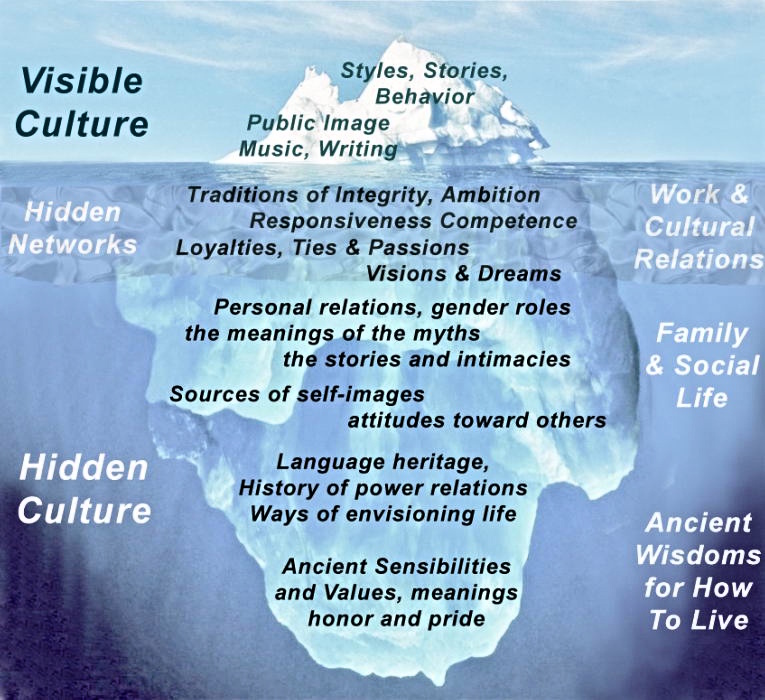
It seems that every kind of observable behavior also has an inexplicable beginning and end, lacking any formula, though our own intuitions readily fill in those little gaps in the science that turn up everywhere. The gaps in formulas can often be estimated, though, guessed at to give a little time for responses to develop, predicting when and where things will begin or end.
“Who cares” seems to be the practical response, of course. All that often matters is how things end, not begin, and approximation is all that’s needed if large parts of things can be accounted for. There’s a bigger reason to be concerned: science has largely lost interest in how things begin and end. It has to do with why all of life is inherently lively and incapable of starting or ending anything without being creative.
It’s that the beginnings of things always require new kinds of organization in working processes… usually requiring a growth process, which science failed to recognize as more fundamental in nature than the equations that give people power over what we wish to change. That emerging systems-in-formation are generally hard to see, as the change is, as yet, unformed, is another part of the puzzle. We don’t “see” their forms till they’re developed, much as one doesn’t see the adult when introduced to the child.
So, formation processes are needed all over, are mostly unrecorded and unexplainable, and are known only through the implications of the changes they enabled. They “seem” to come from nothing, but only virtually nothing, as it is also quite clear that emerging designs emerge from the contexts they are found in by a local self-organizing process, things set in motion as emerging forms that develop in relation to their surroundings and their capture of energy from their environments to do it. It took a few decades to validate the physics behind it. Still, I guess, naturally, it was generally dismissed as uninteresting too, to find quite essential working parts of nature that physics completely ignored! Thought to be uninteresting!! That did not even change when it became clear that what’s hidden in the gaps of science is the set of processes that connect more visible things. The equations that serve as the “standard forms” of nature physics have done such brilliant work, exposing still, it ignores the singular and uniquely emergent ones, causing physics and many other fields to lack curiosity about what is really happening, for which we may all be as profoundly sorry as one can be in short order. The formation of nature’s formulas has no formula, as THAT still appears to be what’s “happening,” especially when we see things going terribly wrong.
I grew up in a multi-generational physics family. I was encouraged often enough to “look around” to see the world as being in motion, not just composed of individual questions and answers. It was thus that the general view, combined with my initial observation of a glaring gap in its application in physics, eventually led me to discover that “every formula needs to develop in the context in which it takes place.” In context, of course, that “big idea” is not much more than how every response to life develops in relation to its particular time in history, place, and context of environmental relationships. Of course, the question of how many levels of working self-organizing relationships are needed for anything to happen is rather daunting. It seems what matters is remaining curious and finding one’s comfort level with what you find interesting.
What came to be most shocking to me, though, was not how physics left little gaps where nature’s connecting parts were, having just failed to notice, but that the beginnings and endings of events are generally the formative processes of the self-animating systems, often resulting in Important lasting changes of design, or the opposite, none of it like formulas. So, it’s the difference between our lives of active relationships and the formulas for profit: night and day. It creates the ever-growing tension between how we make a living and how our most precious rights and freedoms will survive.
Yet, still today, humanity remains unified in pursuing the long-term, regular doubling of business profits and the spoiling of the earth’s habitability. Why wouldn’t we notice that being unprofitable?
Do all our institutions and cultures tolerate the apparent grand collective suicide-mission that business and finance are on? Or are they all just waiting for the right time to turn to other business than growing ever faster to only collapse and be erased by nature’s also efficient methods of doing that? Why have we designed our lives around skimming societal profits to concentrate them in the hands of people who have yet to see the feedback loop of caring for what supports you to continue being supported?
It entraps everyone in taking power over nature until we destabilize it, a decidedly unprofitable general plan. The old rule is “look around.” Why don’t we do that? There are many better ways for large organizations to live on earth, such as growing to fit in and serve rather than blindly to conquer. Is it ONLY that finance is set up to support every attack on someone else’s success? That does seem to be part of it; that finance is NOT building collaborative systems at all, but multiplying suicidal systems. Might finance make a lot more money investing in things that are more useful than that? It’s the exploratory fingers that put things that work together to work better, not automatically multiplying the threats.
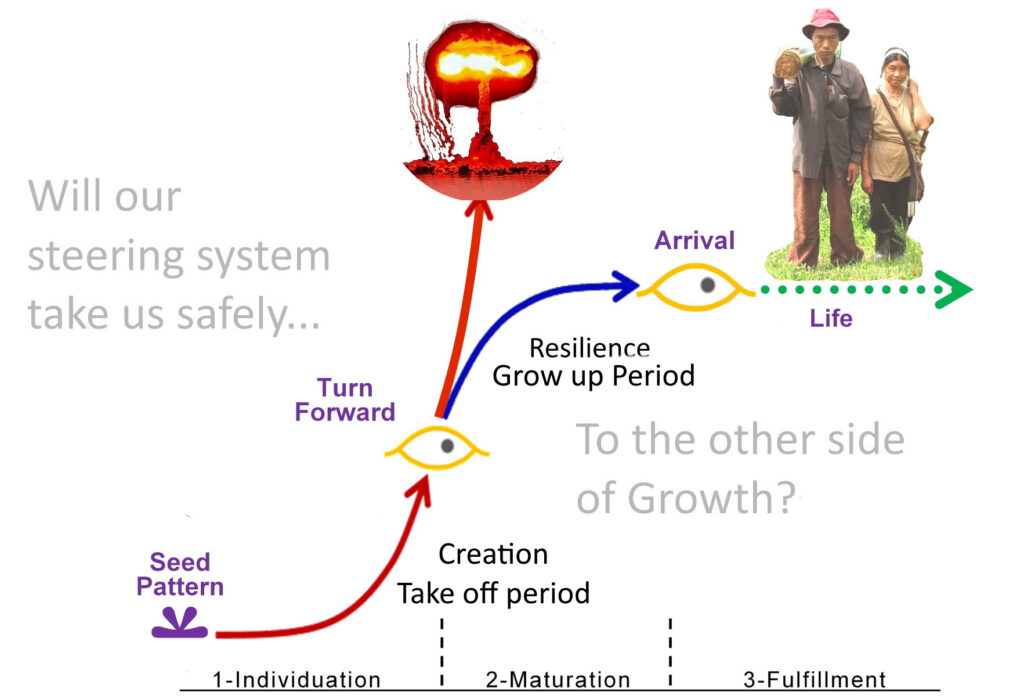
If we could just turn it around the way natural growth does, coupling the bursts of growth with dedicated homemaking, rather than bigger bursts of threats… Could that be a plan?
Jessie Lydia Henshaw Synapse9.com/signals
Natural Systems Design Science